

This post contains affiliate links.
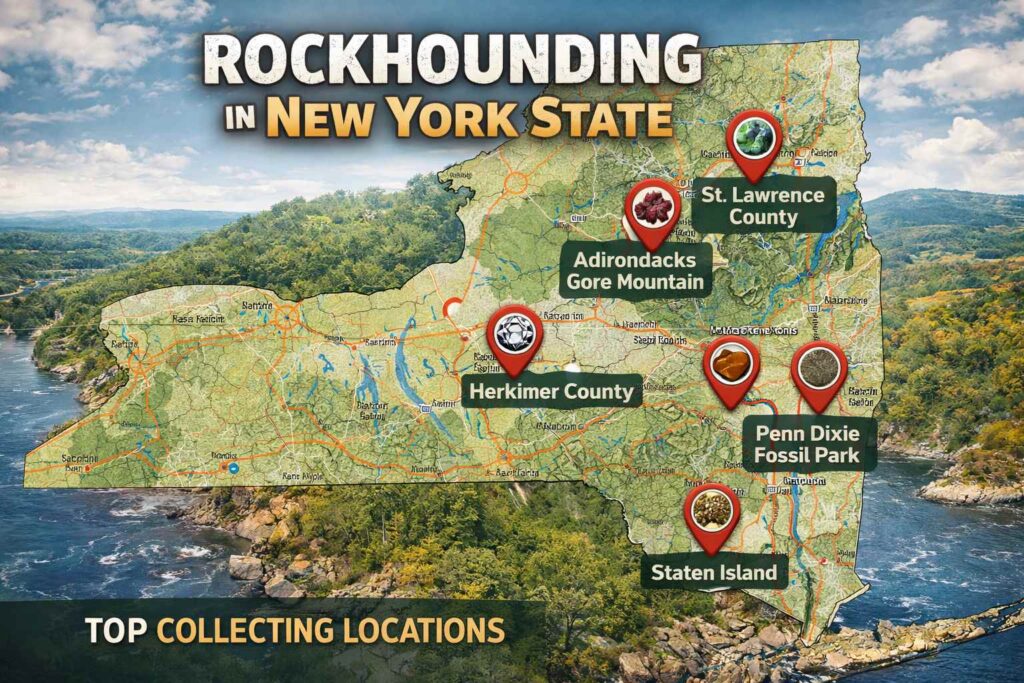
New York State is one of the most underrated rockhounding destinations in the U.S. In a single weekend you can hunt Herkimer diamonds (double-terminated quartz crystals), dig for Adirondack garnets, and collect Devonian fossils near Buffalo. Add in mineral-rich pockets of the Hudson Valley, St. Lawrence County, and even New York City’s Staten Island Greenbelt, and you’ve got a rockhound’s playground.
Best Places to Go Rock Hounding in New York State
This guide covers the best rockhounding spots in New York, what you can find at each location, and the practical tips (and rules) that keep your trip fun, legal, and productive.
Before You Go: Rockhounding Rules in New York (Read This)
New York has a mix of private dig sites (excellent), municipal areas (sometimes okay for surface finds), and protected state lands (often restricted). A key rule from the New York State Department of Environmental Conservation: removing rocks, fossils, or artifacts from state land without a permit is illegal. Department of Environmental Conservation
What that means in plain English:
- Paid dig sites and private mines are your best “sure thing” for collecting legally.
- For public land, assume no collecting unless the site explicitly allows it, you have written permission, or a permit where required.
- When in doubt: surface collecting only (loose material), no digging, no damage, and verify local rules.
1) Herkimer County: The #1 Rockhounding Destination in New York (Herkimer Diamonds)
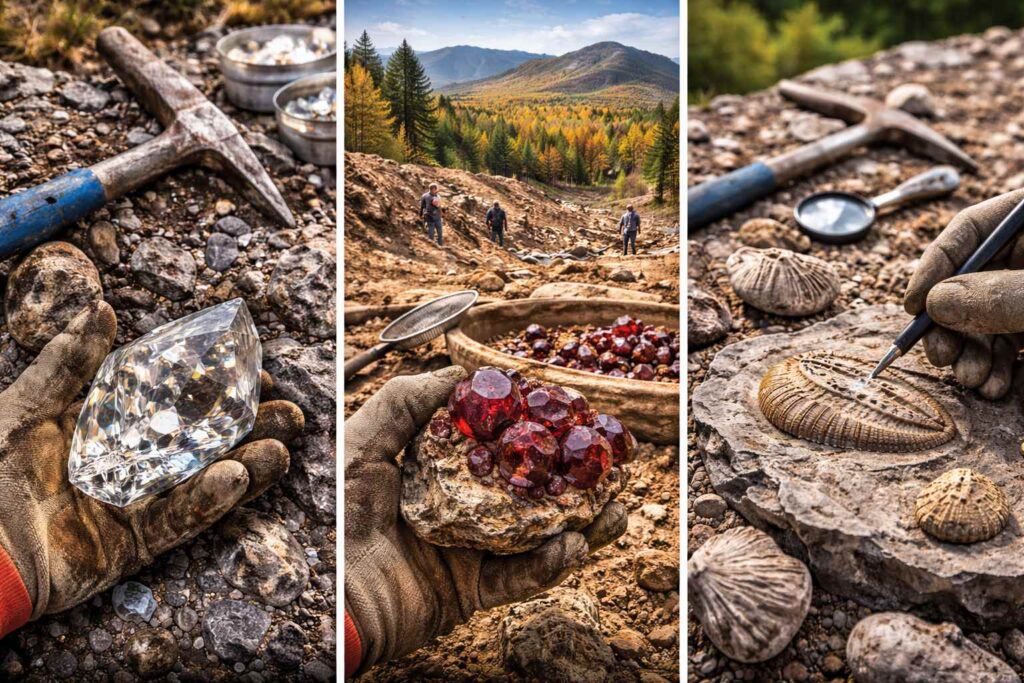
If you’ve ever heard of rockhounding in NY, you’ve heard of Herkimer diamonds—crystal-clear quartz that often forms as beautiful double-terminated points. The best part: several well-known mines let you dig and keep what you find.
Herkimer Diamond Mines (Herkimer/Middleville area)
This is the iconic, family-friendly option with day mining, tools, and on-site guidance. It’s one of the easiest places in New York to actually leave with crystals the same day. Herkimer Diamond Mine+1
Keywords to know: Herkimer diamond mine, Herkimer diamonds New York, quartz crystals NY, gem mining New York.
What you can find:
- Herkimer diamonds (quartz crystals)
- Quartz clusters, pockets, and crystal plates
Pro tips:
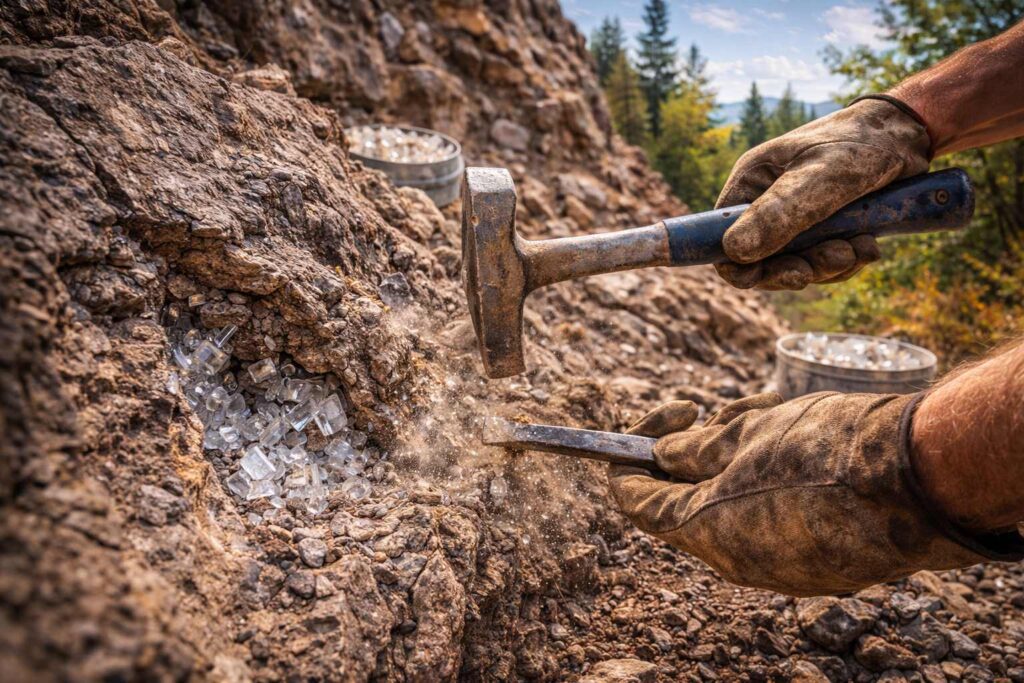
- Bring safety glasses and gloves even if tools are provided.
- Focus on freshly broken rock and crack seams—crystals love cavities.
HerkimerDiamonds.com / Crystal Grove-style mining (St. Johnsville area)
Another popular pay-to-dig option where you can take home what you find, often at a lower cost structure than some premium experiences. Ace of Diamonds Mine & Campground
Herkimer Mountain (premium guided digging)
If you want a more curated “experience day” with guided access and a higher price point, this is one of the known options. Herkimer Mountain Diamond Mine
Diamond Mountain Mining (specialty guided experiences)
This outfit markets guided digs that emphasize rarer crystal forms and “collector-grade” potential. Diamond Mountain Mining, Ltd.
SEO tip for your blog: If you’re writing multiple posts, “Herkimer diamond mining tips” and “how to find Herkimer diamonds” are strong supporting keywords to build topical authority.
2) Adirondacks: Garnet Collecting at Gore Mountain (Barton Mine Tours)
The Adirondacks are legendary for garnet—so much so that garnet is recognized as New York State’s gemstone, tied to the Barton mine history at Gore Mountain. Visit Adirondacks
Garnet Mine Tours (Gore Mountain / North River area)
These guided tours are one of the most beginner-friendly ways to collect garnet in NY with clear rules and access. Visit Adirondacks+1
What you can find:
- Garnet (often chunky, deep red-brown crystals)
Pro tips:
- Bring a small sledge and chisel only if allowed by the tour rules—some tours provide guidance on what’s permitted.
- Garnets can be easier to spot after rain (color contrast pops).
Why it’s worth it: This is one of the most reliable “I want to actually find something cool” rockhounding stops in the state.
3) Western New York: Fossil Hunting at Penn Dixie (Near Buffalo)
Want to mix rockhounding with paleontology? Western New York is famous for Devonian fossils, and Penn Dixie Fossil Park & Nature Reserve is the most accessible, legal, and productive place for the public to collect.
Penn Dixie Fossil Park & Nature Reserve (Hamburg/Blasdell area)
Admission includes a guided component and collecting time—designed for the public to dig and keep fossils. Penn Dixie Fossil Park & Nature Reserve+1
What you can find:
- Devonian fossils (commonly: brachiopods, crinoids, trilobite finds are a known draw at the site) Fossilguy.com+1
Pro tips:
- Bring a small garden trowel and a bucket (unless tools are provided).
- Label your finds by date and location—it’s surprisingly helpful later.
What about 18 Mile Creek?
18 Mile Creek is frequently mentioned in fossil circles, but access and collecting status can be complicated and may change over time. Some fossil community discussions have flagged restrictions/closures in the past. The Fossil Forum
If fossils are your goal, Penn Dixie is the safer “plan your trip around it” choice.
4) St. Lawrence County: Mineral Collecting Country (Upstate North)
Northern New York has a deep mineral history and many classic localities (some are historic or on private land, so permissions matter). Tourism resources even highlight mineral collecting as a regional draw. St. Lawrence County Chamber of Commerce
What you can find in this region (depending on access/permissions)
- Fluorite localities are documented in St. Lawrence County references. Mindat+1
- Other classic minerals are associated with the broader area in historical field trip documentation (often requiring landowner permission). nysga-online.org
Rockhounding strategy here:
- Treat this as a “research + permission” region rather than a casual pull-off-the-road destination.
- Consider museums and local mineral clubs as launch points (many collectors use them to learn which sites are open).
5) Hudson Valley & Downstate: Surprising Rockhounding Near NYC
Yes—there are rockhounding-related finds even near the city, but this is the region where rules vary the most by park and municipality, so verify what’s allowed.
Staten Island Greenbelt: High Rock Park area
Some rockhounding guides mention serpentine and related minerals in Staten Island’s park areas. Rockhounding Maps
High Rock Park is also recognized as part of Staten Island’s Greenbelt system. Department of Environmental Conservation
Important: NYC parks often have strict “leave it where it is” policies. Use this area more for learning geology, photographing interesting rocks, and surface observation unless you have explicit permission to collect.
Best Time of Year for Rockhounding in New York
New York rockhounding is seasonal in practice:
- Spring (April–June): Great visibility after snowmelt; waterfalls and creek beds can expose fresh material.
- Summer (June–August): Best for paid mines and tours (Herkimer + garnets + Penn Dixie all shine here). Herkimer Diamond Mine+1
- Fall (September–October): Cooler hiking weather; less crowded.
- Winter: Limited unless you’re doing indoor events, shows, or planning/research.
Essential Rockhounding Gear for New York
If you want better finds (and fewer headaches), pack this:
- Safety glasses (non-negotiable)
- Gloves
- Rock hammer + cold chisel (for mines that allow it)
- Small sledge (optional)
- Buckets or heavy-duty bags
- Newspaper/bubble wrap for crystal protection
- Permanent marker + zip bags for labeling
- Knee pads (seriously helpful at Herkimer sites)
Practical Tips to Find More (and Better) Specimens
Work smarter at mines
- Watch where experienced diggers are concentrating.
- Target freshly broken rock and look for vugs (cavities) for crystals.
Slow down for fossils
- Fossil hunting is a patience game. Split shales carefully and keep “maybe pieces” until you can inspect them in good light.
Respect the site
- Stay within collecting zones.
- Fill small holes when required.
- Pack out everything.
FAQ: Rockhounding New York State
Can I take rocks from New York State parks or state land?
Generally, no—New York’s DEC states that removing rocks or fossils from state land without a permit is illegal. Department of Environmental Conservation
That’s why pay-to-dig sites are so popular: clear permission and access.
What are the best gemstones to find in New York?
The most famous “gem” finds for rockhounds are:
- Herkimer diamonds (quartz crystals)
- Garnet (Adirondacks / Gore Mountain area) Visit Adirondacks
What’s the easiest place to rockhound in NY for beginners?
For pure success rate and simplicity:
- Herkimer diamond mines (multiple options) Herkimer Diamond Mine+1
- Penn Dixie for fossils Penn Dixie Fossil Park & Nature Reserve+1
Quick “Best Of” List (For Featured Snippets)
Best overall rockhounding in New York: Herkimer County (Herkimer diamonds) Herkimer Diamond Mine+1
Best for fossils near Buffalo: Penn Dixie Fossil Park Penn Dixie Fossil Park & Nature Reserve+1
Best for garnets: Gore Mountain / Barton-associated Garnet Mine Tours Visit Adirondacks
Best “research region” for minerals: St. Lawrence County St. Lawrence County Chamber of Commerce+1
Final Thoughts: Build Your New York Rockhounding Itinerary
If you want a simple, high-success New York rockhounding road trip:
- Start with Herkimer diamonds (1–2 days) Herkimer Diamond Mine+1
- Head north for Adirondack garnets Visit Adirondacks
- Loop west for a fossil day at Penn Dixie Penn Dixie Fossil Park & Nature Reserve+1
That combination hits New York’s most famous “take-home treasures” while staying on the right side of access rules.
This post contains affiliate links.