

This post contains affiliate links.
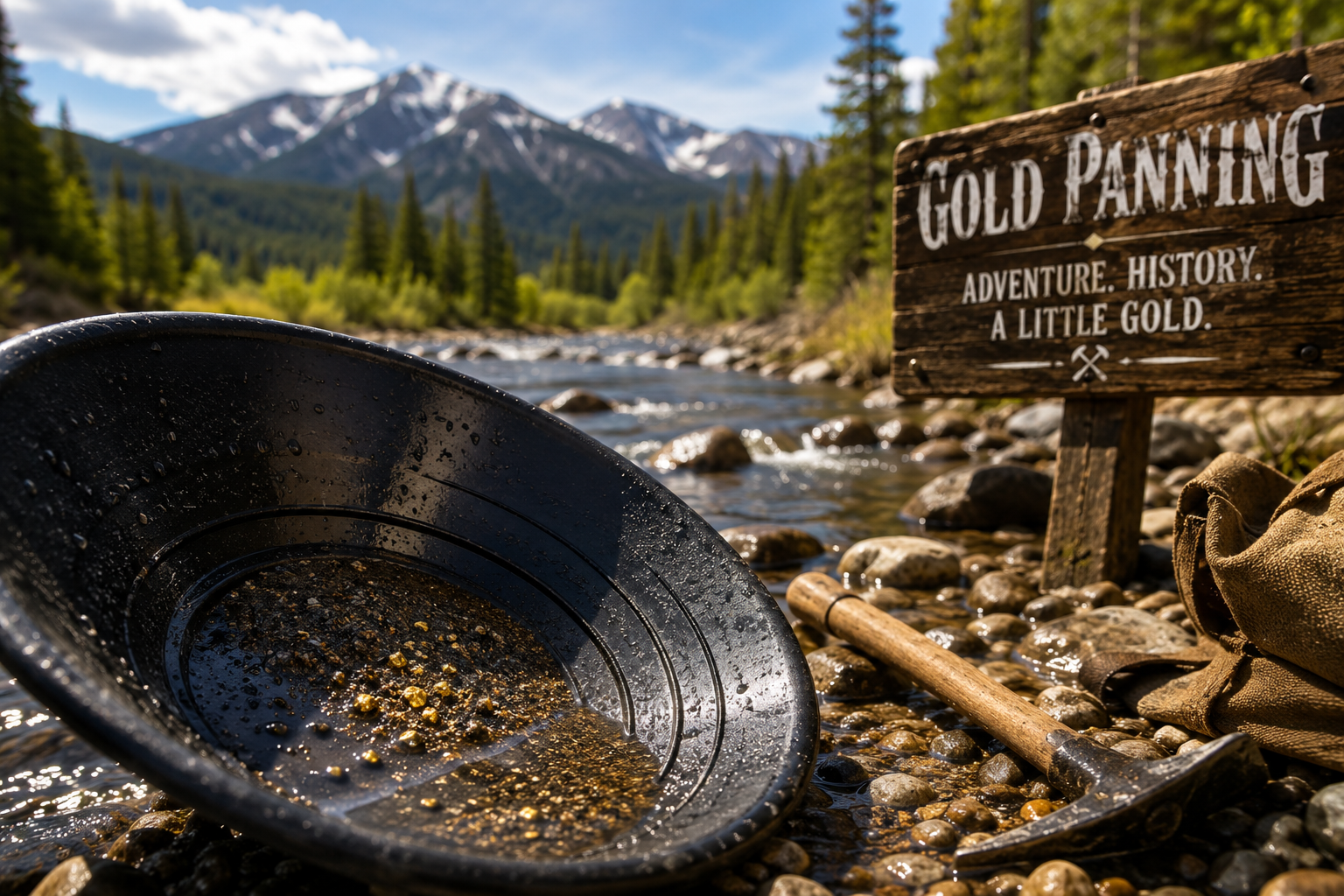
There is something deeply suspicious about gold panning. Rational adults will drive six hours into the mountains, stand knee-deep in freezing water, spend all afternoon swirling mud in a metal bowl, and then proudly celebrate finding a speck of gold so small it looks like glitter from a kindergarten art project. Nobody gets rich doing this anymore, yet thousands of people keep showing up every year carrying pans, buckets, shovels, folding chairs, sandwiches, and the kind of optimism normally associated with lottery tickets and reality TV auditions.
Part of the magic is that gold panning feels like stepping directly into American history without needing to read a single plaque at a museum. You can stand beside the same rivers where exhausted miners once camped for months chasing rumors of fortunes hidden under gravel bars. Some old mining towns still cling to the hillsides with crooked wooden buildings, rusted equipment, and saloons that look like they have seen at least three bar fights and one mysterious disappearance. Places like California’s Gold Country, the rivers around Colorado, Arizona desert washes, and remote Alaska creeks all carry that strange feeling that maybe—just maybe—there is still something valuable hiding under the next rock.
The funny thing is that most beginners arrive completely unprepared for what gold panning actually involves. Movies make it look dramatic. In reality, it is a combination of patience, lower back pain, wet socks, and repeatedly asking strangers, “Am I doing this right?” while pretending you totally know what you are doing. The first time someone tries to pan, there is usually a brief moment where all the dirt accidentally gets dumped back into the river along with the possible gold. This is followed by nervous laughter and the sudden realization that professional miners in the 1800s were somehow doing this all day without YouTube tutorials or energy drinks.
Still, the second that tiny flash of yellow appears in the bottom of the pan, the entire brain changes chemistry. Suddenly every rock becomes suspicious. Every crack in the riverbed starts looking profitable. People who normally cannot commit to watering a houseplant become amateur geologists within thirty minutes. They start using phrases like “black sand concentration” and “pay dirt” while standing beside a creek wearing sunscreen, bug spray, and an expression that says they are now emotionally invested in this muddy hole forever.
Gold panning also attracts some wonderfully unusual characters. Spend enough time near popular prospecting rivers and you will meet retired treasure hunters, conspiracy theorists, history buffs, survivalists, RV travelers, and men named Randy who own twelve different shovels for reasons nobody fully understands. There is always one person carrying equipment that looks advanced enough to locate submarines. Meanwhile, another guy is successfully finding gold using a pan that appears to have survived three wars and possibly a house fire.
The locations themselves are half the adventure. Some gold areas are hidden deep in pine forests where the rivers roar through narrow canyons. Others sit in wide-open deserts full of cactus, heat shimmer, and lizards watching you struggle with basic excavation skills. Alaska adds glaciers, grizzly bear warnings, and mosquitoes large enough to file flight plans. In many places, abandoned mining relics still sit quietly in the woods: collapsed cabins, rusted boilers, broken carts, and machinery that looks like it was assembled by extremely determined blacksmiths with no concern whatsoever for workplace safety.
Then there are the ghost towns. Gold rush history created hundreds of boomtowns that exploded overnight with saloons, hotels, gambling halls, blacksmith shops, and people making terrible financial decisions at record speed. Some towns disappeared almost instantly once the gold ran out. Others survived as eerie little tourist stops where visitors now buy ice cream while reading signs about gunfights, floods, fires, and miners who probably should not have trusted dynamite quite so much.
Modern gold panning is less about getting rich and more about the strange satisfaction of slowing down long enough to search a river by hand. It is part treasure hunt, part outdoor adventure, part history lesson, and part excuse to stand in beautiful places pretending you are in an old frontier movie. Nobody cares if the final gold vial is worth twelve dollars. The real reward is the story about how you almost slipped into the creek, accidentally filled your boots with icy water, scared yourself with a snapping turtle, and still went home convinced that next weekend might be the weekend you strike it big.
And honestly, that belief is probably the most powerful thing gold ever mined out of those rivers.
This post contains affiliate links.