

This post contains affiliate links.
Rock Tumbling for Kids: A Fun Beginner’s Guide to Rock Tumblers, Grit, Polishing Rocks, and Turning Rough Stones into Shiny Treasures
Rock tumbling is one of those hobbies that feels a little bit like science, a little bit like treasure hunting, and a little bit like magic. A child can start with an ordinary, dull, rough-looking stone and, with patience, water, grit, and a rock tumbler, watch that same stone slowly become smooth, colorful, and shiny.
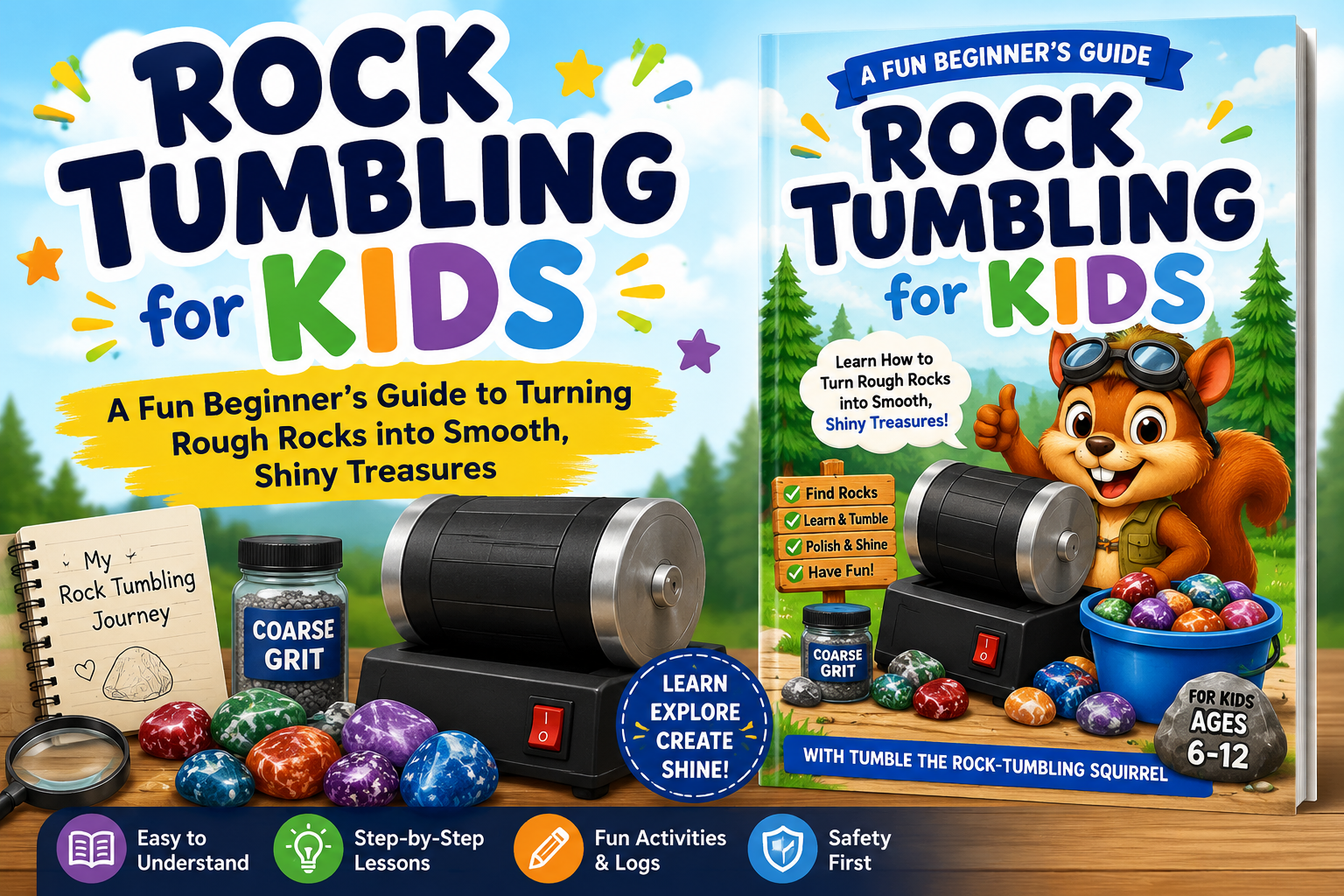
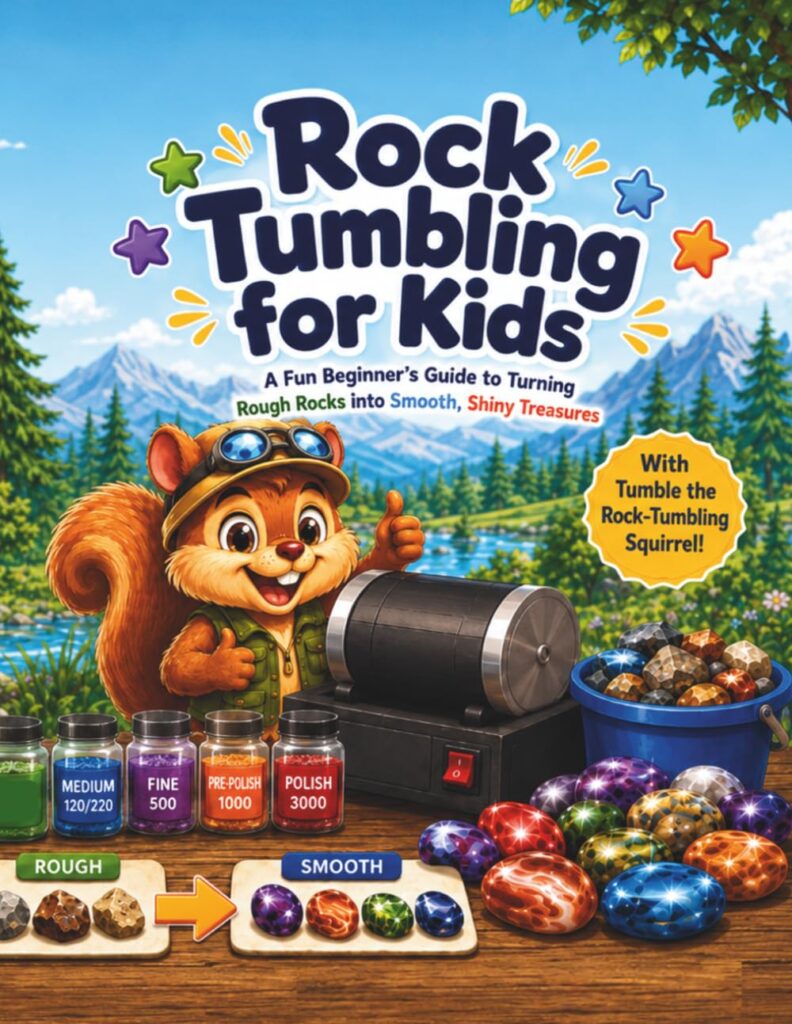
That is the idea behind Rock Tumbling for Kids: A Fun Beginner’s Guide to Turning Rough Rocks into Smooth, Shiny Treasures by SparkTrail Press. This bright, kid-friendly book was created to help beginners understand rock tumbling in a simple, fun, and hands-on way.
Instead of feeling like a dry science textbook, this book is designed like a colorful children’s workbook. It uses large readable text, cheerful illustrations, simple diagrams, activity pages, and a friendly guide named Tumble the Rock-Tumbling Squirrel to walk young readers through the whole rock tumbling adventure.
What Is This Book About?
Rock Tumbling for Kids teaches children how rough rocks become polished stones. The book begins with the basics: what rock tumbling is, how nature smooths rocks in rivers and streams, and how a rock tumbler speeds up that same idea at home.
Kids learn that rock tumbling is not instant. Rocks roll, rub, and smooth slowly inside a tumbler barrel with water and grit. Over time, sharp edges wear down, rough surfaces become smoother, and hidden colors begin to show.
The book explains the four main rock tumbling stages in a simple way:
Stage 1: Coarse Grind shapes the rocks and removes sharp edges.
Stage 2: Medium Grind smooths scratches and rough marks.
Stage 3: Fine Grind / Pre-Polish gets the rock surface ready for shine.
Stage 4: Polish brings out the color and glossy finish.
This makes the process easy for kids to understand without overwhelming them.
Rock Tumbling for Kids: A Fun Beginner’s Guide to Rock Tumblers, Grit, Polishing Rocks, and Turning Rough Stones into Shiny Treasures
Meet Tumble the Rock-Tumbling Squirrel
One of the fun parts of the book is the mascot, Tumble the Rock-Tumbling Squirrel. Tumble is a cheerful cartoon squirrel with warm brown fur, big expressive eyes, a happy smile, and an explorer-style vest.
Tumble helps explain each lesson, points out safety reminders, gives simple tips, and keeps the book feeling friendly. Kids are more likely to stay engaged when they feel like a fun guide is helping them through the process.
Throughout the book, Tumble appears beside tumblers, buckets of rocks, polished stones, safety gear, cleaning tools, and activity pages. This gives the book a consistent children’s educational style while keeping each page fresh.
A Strong Safety Section for Beginners
Because rock tumbling uses equipment, grit, water, and cleanup tools, the book includes an important safety section. Kids learn that rock tumbling should be done with adult supervision.
The safety pages cover simple rules such as:
Adult help is needed when setting up, opening, and cleaning the tumbler.
Grit is not food and should never be tasted.
Hands should be washed after touching rocks, grit, or slurry.
Dry rock dust should be kept away from the face.
Slurry should never be poured down the kitchen sink.
Rock tools should stay separate from food tools.
The book also includes a safety gear checklist with goggles, gloves, towel, scoop, water, and an adult helper. These pages are written in a friendly way so kids learn safety without feeling scared.
Learning the Parts of a Rock Tumbler
The book introduces children to the main parts of a rock tumbler. Kids learn about the barrel, lid, rollers, motor base, switch, water, grit, and the space rocks need to roll.
One of the most useful lessons explains why the barrel should not be too full. If the barrel is packed too tightly, the rocks cannot roll and tumble properly. The book shows a clear “too full” versus “just right” visual so kids can understand why space matters.
There is also a page about why tumblers are noisy. This is a great detail for families because beginners may not realize that a tumbler makes sound while the barrel turns. The book explains that the noise means the tumbler is working and suggests good places to set it up, such as a garage, laundry room, basement, or sturdy table in a quiet area.
Choosing the Right Rocks
Not every rock is a great tumbling rock. This book helps kids learn what makes a good choice.
Good tumbling rocks are usually:
Hard
Smooth-ish
Not crumbly
Similar in size
Similar in hardness
The book introduces examples of rocks that often tumble well, such as agate, jasper, quartz, amethyst, and petrified wood. It also explains why soft, cracked, flaky, or crumbly rocks may not polish as well.
Kids also learn about sorting rocks by size and hardness. This is important because similar rocks usually tumble better together. If very hard rocks are mixed with much softer rocks, the harder rocks may scratch or wear down the softer ones.
There are also activity pages where kids can write field notes, record where they found their rocks, and draw or paste pictures of their favorite finds.
Supplies Kids Need to Start Rock Tumbling
The supplies section keeps things simple and beginner-friendly. It introduces the basic tools needed for a rock tumbling adventure:
Rock tumbler
Tumbler barrel
Rough rocks
Grit
Polish
Water
Strainer
Bucket
Towel
Scoop
Notebook
The book explains what grit is in kid-friendly terms: a gritty powder that works like tiny rock sand. Grit helps rub away rough spots and makes stones smoother step by step.
Kids also learn the four kinds of grit: coarse, medium, fine/pre-polish, and polish. Each one has a job, and using them in order helps the rocks improve little by little.
The Hands-On Rock Tumbling Journey
After the basics, safety, tumbler parts, rock selection, and supplies, the book moves into the actual tumbling process.
Kids learn how to load the barrel by adding rocks, coarse grit, and water, then putting the lid on tightly. The book explains that the barrel should be about two-thirds full so the rocks have room to roll.
The Stage 1 pages explain that coarse grind is all about shaping, not shining. This is important because many beginners expect shiny rocks too early. The book reassures kids that rocks may look smoother but still dull after the first stages, and that is normal.
Later pages walk through cleaning the barrel before the next stage, using medium grit, moving into fine grit or pre-polish, and finally reaching the polish stage.
The book makes the process feel like an adventure while still teaching the real steps in a clear way.
Why Rocks May Not Shine Right Away
One of the most helpful parts of this book is that it explains that not all rocks polish the same way. Some stones become bright and glossy, while others stay dull. That does not mean the child failed.
Rocks are natural, and each one is different. Some may have tiny cracks, pits, soft spots, or textures that keep them from becoming super shiny. The book encourages kids to enjoy the process and appreciate each rock for what it is.
That message is important because it helps young rock tumblers stay excited instead of getting discouraged.
Cleanup and Care
The cleanup chapter teaches kids how to rinse rocks safely, handle slurry, clean the barrel, and store supplies.
Slurry is explained as muddy rock water made from old grit, water, and tiny rock dust. Kids learn not to pour it down the sink because it can clog drains. Instead, they should catch it in a bucket and ask an adult where to dump it safely.
The book also encourages kids to keep grit, polish, scoop, towel, and notes together in a rock tumbling kit. This makes it easier to start the next batch.
Activity Pages Make the Book More Useful
This book is not just a reading guide. It also includes workbook-style pages that kids can use during their own rock tumbling projects.
Helpful activity pages include:
Rock hunt field notes
My rock collection page
Safety quiz
Setup checklist
Stage check-in pages
Favorite finished rock page
Rock tumbling log
Junior Rock Tumbler certificate
These pages help kids observe, write, draw, and track their progress. That makes the book feel more interactive and gives young readers a reason to return to it during each tumbling stage.
Who Is This Book For?
Rock Tumbling for Kids is a good fit for children who love rocks, nature, science, collecting, treasure hunting, and hands-on hobbies. It is also helpful for parents, grandparents, homeschool families, teachers, and activity leaders who want a simple beginner guide for rock tumbling.
This book works especially well for beginners because it does not assume the reader already knows rock tumbling terms. It explains words like grit, barrel, polish, slurry, stage, and rough rock in a way kids can understand.
Why This Book Stands Out
The strongest part of this book is the way it combines education with fun. It teaches real rock tumbling basics, but it does not feel too technical or crowded.
The pages are bright, clean, and visual. The text is large and easy to read. The diagrams are simple. Tumble the Squirrel gives the book personality. The activity pages make it feel like a guide kids can actually use while tumbling rocks at home.
For families looking for a beginner rock tumbling book for kids, this book offers a clear path from rough stones to polished treasures.
Final Thoughts
Rock tumbling teaches patience, observation, curiosity, and care. Kids learn that good results take time. They learn that rough things can change little by little. They learn that every rock is different, and every batch is a new surprise.
Rock Tumbling for Kids turns that process into a cheerful, easy-to-follow adventure. With Tumble the Rock-Tumbling Squirrel as their guide, young readers can learn the basics of tumblers, grit, polishing, safety, cleanup, and rock collecting while having fun along the way.
For kids who love shiny stones, outdoor exploring, science activities, or hands-on projects, this book is a bright and friendly place to begin.
This post contains affiliate links.